When the Saints Go Marching In
G. Connor Salter
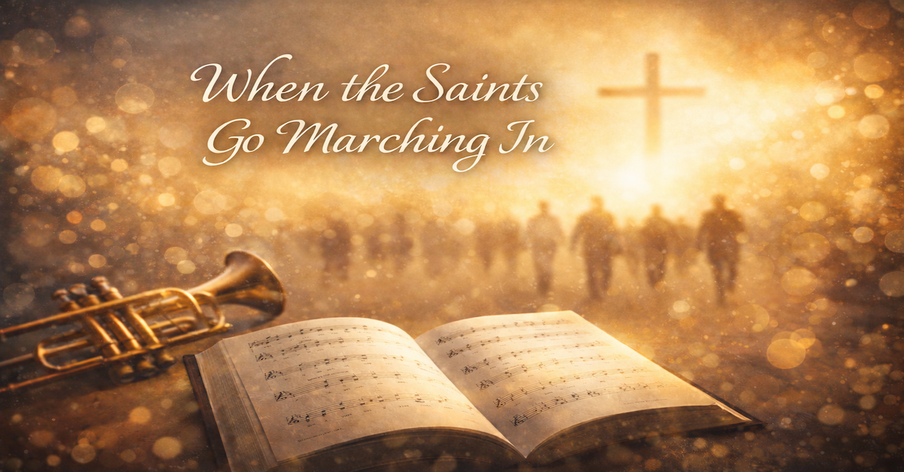
When the Saints Go Marching in Lyrics
O, when the saints go marching in,
O, when the saints go marching in.
Lord, I want to be in that number
When the saints go marching in.
O when the sun refused to shine,
O when the sun refused to shine,
Lord, I want to be in that number
When the sun refused to shine.
O when they gather ‘round the throne,
O when they gather ‘round the throne,
Lord, I want to be in that number
When they gather ‘round the throne.
O when they crown Him Lord of all,
O when they crown Him Lord of all,
Lord, I want to be in that number
When they crown Him Lord of all.
And on that hallelujah day,
And on that hallelujah day,
Lord, I want to be in that number
On that hallelujah day.
The Story Behind When The Saints Go Marching In
As music education resources like Hymnary.org and Discipleship Ministries’ History of Hymns explain, the exact origin of “When the Saints Go Marching In” may be impossible to find. While some hymns were first published in books with their authors clearly labeled, many were passed along orally from one congregation to another until a canonical version was recorded or published. Along the way, these songs often had their lyrics changed, making it hard to say who wrote the original version (or whether the song developed from an earlier song lost to time).
Oral transmission was especially common for gospel songs passed down in African American churches from 1619 through 1865, when slavery was legal in the United States and racism restricted many African Americans from learning to read or write, much less publish songs and historical records about their music.
While it is difficult to say who first wrote “When the Saints Go Marching In,” records show the versions that became definitive. The Paramount Jubilee Singers were the first to record the traditional version in 1923, on a 78-inch LP record with another famous hymn, “That Old Time Religion,” on the B side. Luther G. Presley wrote another famous version, which was published in the 1937 book Favorite Radio Songs edited by Virgil O. Stamps.
For most listeners, the definitive early version was recorded by jazz singer Louis Armstrong in 1938 for Decca Records. Armstrong performed the song many more times during his career. It became a standard at jazz clubs and revival concerts across the country, and is still played regularly at New Orleans jazz festivals and funerals.
Scripture References in When the Saints Go Marching In
Since different versions of “When the Saints Go Marching In” can have very different lyrics, the references to Bible verses may vary depending on which version audiences hear. For example, the 1937 version by Luther G. Presley features references to being a pilgrim, referencing verses like Psalm 119:19 about being a “sojourner in this life,” and traditional Christian imagery in books like The Pilgrim’s Progress by John Bunyan.
However, most scholars agree that the canonical lyrics for “When the Saints Go Marching In” reference apocalyptic Bible verses. Books like The Bible in Music by Siobhán Dowling Long and John F.A. Sawyer specifically match the song’s details to verses in Revelation 6-8 and Revelation 14.
The refrain about “marching in” and “being in that number” refers to a group of 144,000 people in white robes entering heaven in Revelation 7 and Revelation 14. These followers are commended for staying faithful even after experiencing great suffering.
The line about the sun refusing to shine fits the description of the sun becoming dark and the moon red like blood in Revelation 6:12.
The verse about people gathering around the throne references the throne in heaven, first mentioned in Revelation 4, in which Jesus sits with angels and humans paying homage to him.
The verse about Jesus being crowned references passages like Revelation 6:2 and Revelation 19:12, where Jesus is given a crown and rides into battle on a white horse to combat Satan’s forces.
Scripture Interpretations of When the Saints Go Marching In
Different schools of thought have different interpretations about what these Revelation passages mean. For example, amillennialist scholars read Revelation’s details about battle and persecution as symbolic references to the early church’s persecution under Roman emperors, building up to a conclusion that God would restore all good things in a distant future. Premillennialist scholars read the passages as prophetic references to future events where disasters will occur in a cosmic battle between God and the Devil before evil is finally destroyed.
Given that “When the Saints Go Marching In” started as a song for African-American congregations living in slavery, the original audiences probably took a middle ground between those two views. As Christians living in slavery (many of them born on plantations), they would have empathized with stories about early church persecution, but been more interested in stories about the future: was God going to set all things right in the end? As Christians raised with limited education opportunities, they probably would not have cared about all the intricacies of premillennial theologians debating what that future would look like. People working long plantation hours with Sunday morning service as their one respite (or secret services late at night because the plantation owners forbade church) wouldn’t be that concerned about scholarly debates about how many days the rapture would last. Their main concern would have been how to live out the song’s refrain: to be a faithful servant when the end came.
Most Christians today (at least those living in western countries) will never experience the kind of lifelong pain that African American Christians experienced before slavery was abolished. However, the song’s emphasis on taking a long view of church history and hoping in the final restoration of goodness can teach everyone something useful today. Whatever we experience today, we remember to follow God well so that one day he will say, “well done, good and faithful servant.”
Popular Hymn Lyrics with Story and Meaning
Day by Day and With Each Passing Moment
Jesus Loves Me
What a Friend We Have in Jesus
Blessed Assurance
Nearer My God to Thee
Abide with Me
His Eye Is On the Sparrow
Be Thou My Vision
Holy, Holy, Holy Lord God Almighty
Amazing Grace
And more!
Playlist of Performances of “When the Saints Go Marching In”
Today's Devotional
A Prayer to Surrender Myself to God - Your Daily Prayer - March 6
We say we love Jesus, but have we truly given Him everything? Discover what it means to stop holding back and surrender your whole life to the One who gave His for you.
Top Artists


Top Music Videos

Chris Tomlin Chris Tomlin’s Powerful Live Rendition of ‘The First Hymn’ Will Stir Your Soul

Anne Wilson Anne Wilson Releases ‘Stars’ Music Video — An Uplifting and Encouraging Tune

toby mac TobyMac Drops ‘Heaven On My Mind’ Official Music Video

Chris Tomlin Chris Tomlin - Holy Forever
John Mark McMillan John Mark McMillan and Sarah McMillan - King Of My Heart


