When I Survey the Wondrous Cross
GodTube Staff
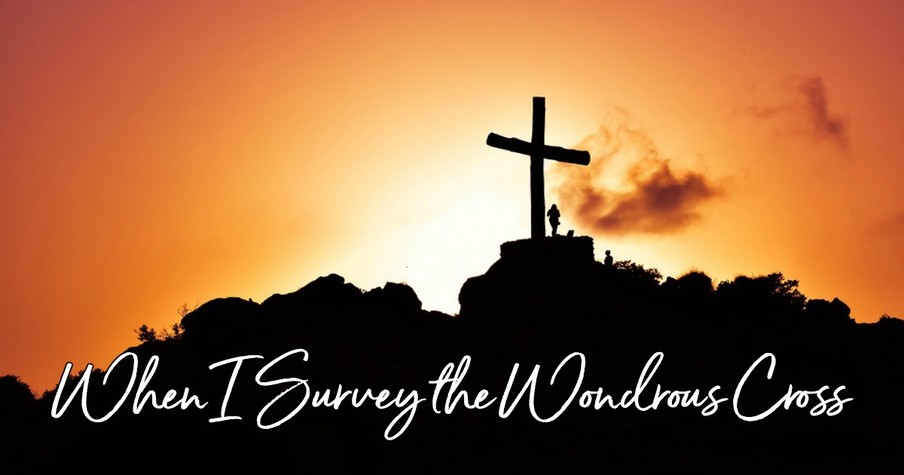
1. When I survey the wond'rous Cross
On which the Prince of Glory dy'd,
My richest Gain I count but Loss,
And pour Contempt on all my Pride.
2. Forbid it, Lord, that I should boast,
Save in the Death of Christ my God:
All the vain things that charm me most,
I sacrifice them to his Blood.
3. See from his Head, his Hands, his Feet,
Sorrow and Love flow mingled down!
Did ever such Love and Sorrow meet?
Or Thorns compose so rich a Crown?
4. His dying Crimson, like a Robe,
Spreads o'er his Body on the Tree;
Then am I dead to all the Globe,
And all the Globe is dead to me.
5. Were the whole Realm of Nature mine,
That were a Present far too small;
Love so amazing, so divine,
Demands my Soul, my Life, my All.
In Isaac Watts’ early years, congregations in England sang almost exclusively from metrical psalms. Church music was confined to paraphrased portions of Scripture, often lacking the warmth and directness that stirred personal devotion. By the time of Watts’ death, however, the landscape of English hymnody had changed dramatically. Through more than 600 hymns published in seven collections, Watts helped move the Church from strict psalm recitation to rich, Christ-centered hymn writing grounded in the full counsel of Scripture.
Watts believed that hymns should do more than restate biblical text. They should carry the truths of the gospel in language suited for congregational praise. He insisted that church songs reflect the message of the sermon and clearly proclaim Christ, not merely retell Old Testament events without reference to their fulfillment. For Watts, singing was an act of teaching and response. Hymns were to give voice to the believer’s repentance, gratitude, and hope, expressing living faith rather than distant history.
Through this conviction, Watts became a central figure in shaping the hymn tradition we now take for granted. He showed that theological depth and heartfelt worship belong together. By writing hymns that were biblically faithful, doctrinally clear, and personally expressive, he opened the door for generations of hymn writers to follow. The Church’s song was never the same, and much of what we sing today stands on the foundation he laid.
Popular Hymn Lyrics with Story and Meaning
Day by Day and With Each Passing Moment
Jesus Loves Me
What a Friend We Have in Jesus
Blessed Assurance
Nearer My God to Thee
Abide with Me
His Eye is On the Sparrow
Be Thou My Vision
Holy, Holy, Holy Lord God Almighty
Amazing Grace
Today's Devotional
A Prayer to Release Comparison and Follow Your God-Given Call - Your Daily Prayer - March 28
Comparison is quietly stealing your confidence, and your calling. Break free from the lies and step boldly into the life God designed just for you.
Top Artists


Top Music Videos

Chris Tomlin Chris Tomlin’s Powerful Live Rendition of ‘The First Hymn’ Will Stir Your Soul

toby mac TobyMac Drops ‘Heaven On My Mind’ Official Music Video

Anne Wilson Anne Wilson ‘Hold Your Horses’ Official Music Video

Chris Tomlin Chris Tomlin - Holy Forever
John Mark McMillan John Mark McMillan and Sarah McMillan - King Of My Heart


